
Most people assume better ad performance means tracking more conversion types. Awais Khalid's work for a Dutch dental clinic proved the opposite.
In his own words: "The 51 highlighted in yellow represents form registrations only, the primary conversion event this campaign is optimized for. However, the campaign generated even more appointments through phone calls, as shown in the blue conversion table.
At the start, the campaign was optimized for both phone calls and form submissions. While call volume was high, only about 30% of those calls were from qualified prospects. To improve lead quality, I removed phone calls from the optimization goal and focused solely on form submissions, which are more reliable and easier to track.
The result? Form registrations increased, and interestingly, the number of phone calls also grew, with the percentage of qualified calls jumping from 30% to 75%. Sometimes, better optimization isn't about tracking more conversions, it's about tracking the right ones."
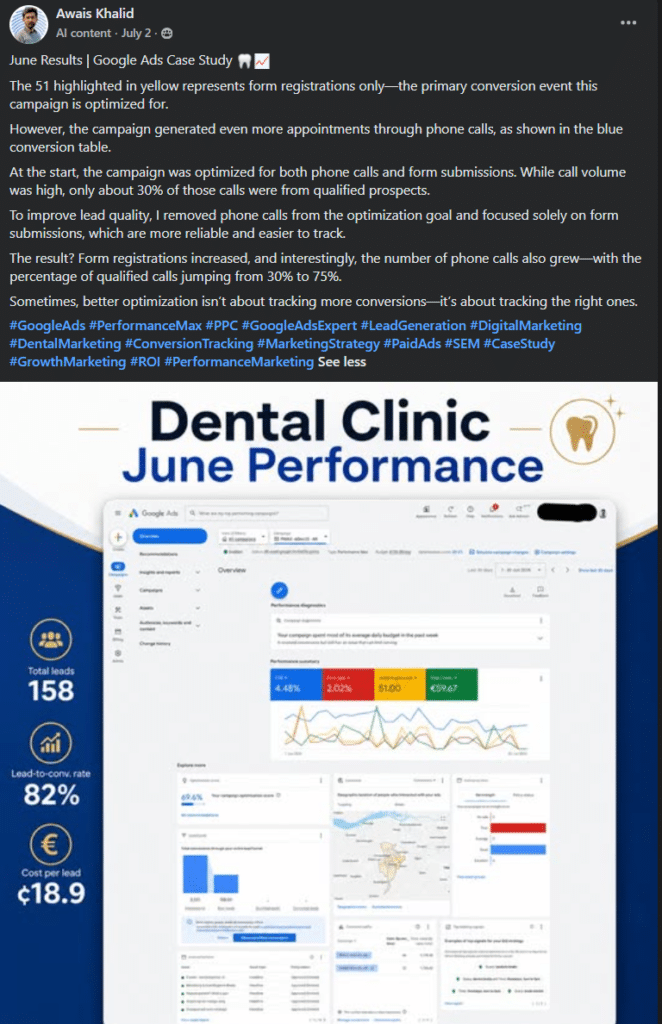
The dashboard behind that story, for June: 158 total leads at roughly €18.9 per lead, a 4.48% CTR, a 2.02% conversion rate, and 51 form registrations at €59.67 per conversion, on a €100 daily budget. The numbers reconcile cleanly against each other and against the campaign's monthly spend.
That's the real lesson here: narrowing what you optimize for can improve the metric you dropped too, not just the one you kept.
If you want to learn how to run and actually optimize campaigns like this, enroll in Aamir Ahmer Academy today.